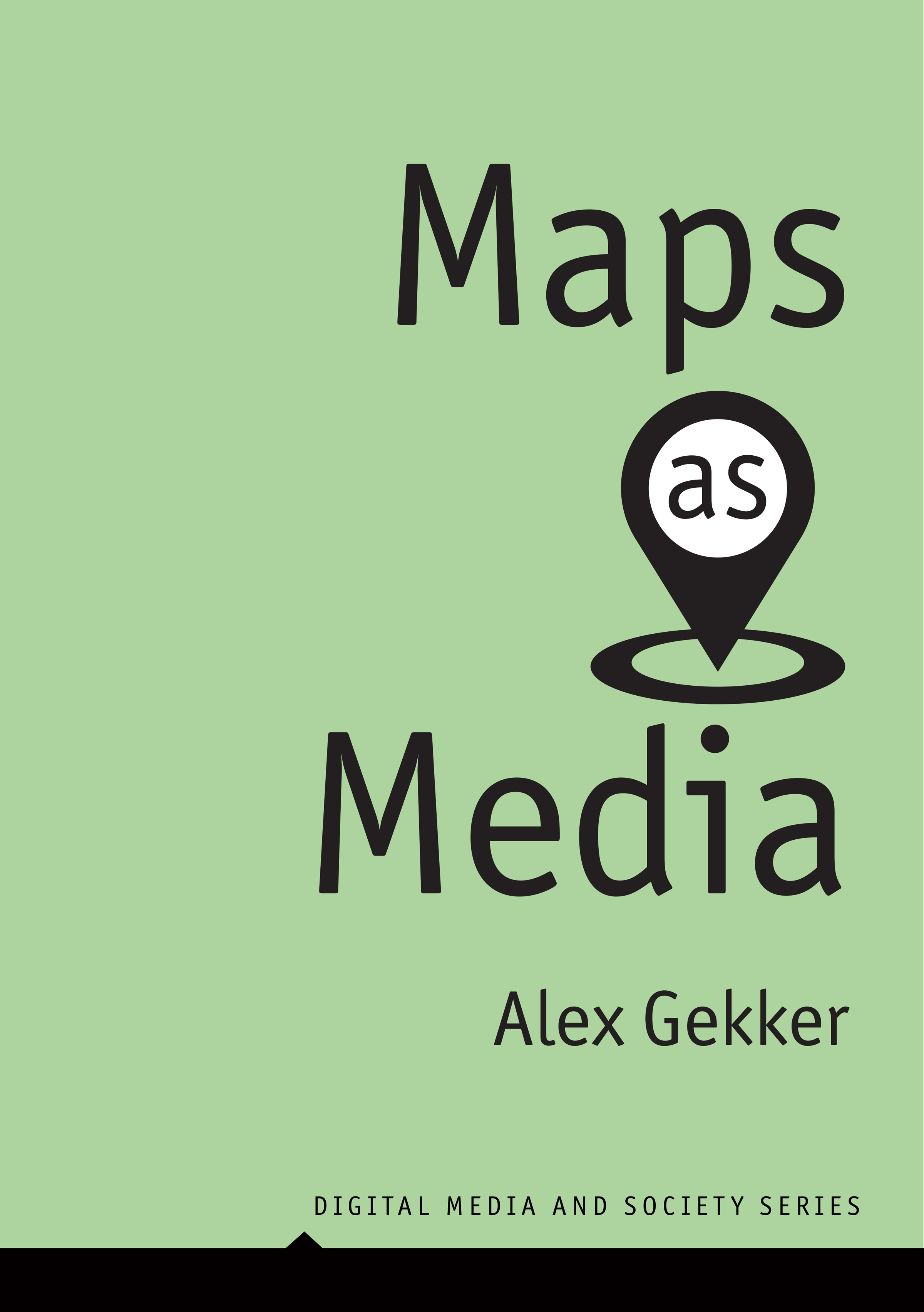
Every day, two billion people open Google Maps. Millions more summon Ubers, chase Pokémon, swipe through Grindr, or follow Deliveroo's turn-by-turn instructions to earn a living. Each app has its own purpose—but underneath, they share the same cartographic infrastructure, quietly tracking movements while users focus on arriving, playing, or getting paid.
We've learned to scrutinise social media. We debate algorithmic feeds and platform power. Yet digital maps escape this suspicion. They feel too helpful, too neutral, too much like simple tools to warrant critique.
Maps as Media argues this is precisely how they exercise power.
The Concept: Casual Power
The book introduces casual power—a mode of influence that operates through habituation rather than coercion, through seamlessness rather than surveillance. Unlike the ideological distortions of colonial cartography or the disciplinary gaze of CCTV, casual power works by making maps feel natural, innocent, even fun.
When Waze gamifies your commute with points and achievements, when Pokémon GO sends millions into parks and shopping centres, when Google Maps' 'popular times' feature quietly normalises location tracking—these aren't neutral design choices. They're techniques for capturing attention, extracting data, and shaping behaviour while minimising the friction that might prompt users to ask why or for whom.
As historian Raymond Craib observes: 'No other image has enjoyed such prestige of neutrality and objectivity... The most oppressive and dangerous of all cultural artefacts may be the ones so naturalised and presumably commonsensical as to avoid critique' (Craib 2000, 8).
By examining interface design, gamification, metrics, and layered visualisations, the book reveals how digital maps strip down the world into optimised approximations—benefiting the economic interests of their creators while shielding themselves from the scrutiny we reserve for social media and shopping apps.
What the Book Argues
Movement
Turn-by-turn navigation doesn't just help us get places—it transforms us from navigators into passengers. As interfaces disappear into autonomous vehicles and AR glasses, we risk losing not just spatial knowledge but the very capacity for wayfinding that shaped human cognition for millennia.
Play
Maps have become playgrounds. But gamification isn't innocent fun—it's a depoliticisation strategy. By making cartography entertaining, platforms deflect the critical attention we'd otherwise direct at their surveillance infrastructure. The more we play, the less we question.
Work
For millions of gig workers, the map is the boss. Delivery riders and rideshare drivers experience algorithmic management not as code but as cartography—a coloured zone here, a surge price there, an optimised route that leaves no room for human judgment.
Surveillance
Digital maps don't watch us like cameras do. They integrate into routines so thoroughly that tracking becomes invisible—not panoptic observation but infrastructural capture, harvesting location data as a byproduct of being helpful.
Looking Forward
The book concludes by examining emerging challenges: the blurring boundaries between maps and datasets, the disappearance of interfaces through autonomous vehicles and augmented reality, and the encroachment of generative AI on cartographic epistemology.
From Peer Review
While we await endorsements from named scholars, here's what anonymous peer reviewers said about the near-final manuscript:
'A strong and original contribution on an important topic. This book offers a unique take on digital maps—there is no existing work that does what this book is doing.'
'Very well placed and amply qualified... This book will appeal to critical geography scholars, but its real audience is those in media and communication fields, where such a book is sorely needed.'
About the Author

For Course Adoption
Suitable for courses in:
- Media Studies & Digital Culture
- Critical Geography & Urban Studies
- Science and Technology Studies
- Platform Studies & Critical Algorithm Studies
- Surveillance Studies
- Digital Methods & Interface Studies
If you teach a course where Maps as Media could be assigned, we'd appreciate your input. Fill out the form below to express interest in an inspection copy (subject to availability).
Course Adoption Interest
Please share your details below if you're interested in adopting Maps as Media for your course. This information helps Polity Press identify potential adopters and provide inspection copies where available.
Connect
For media inquiries, speaking engagements, or podcast bookings: [email protected]
Follow updates about the book and related work at alexgekker.com